DAA Hip Replacement

DAA vs Traditional Hip Replacement
DAA Hip Replacement

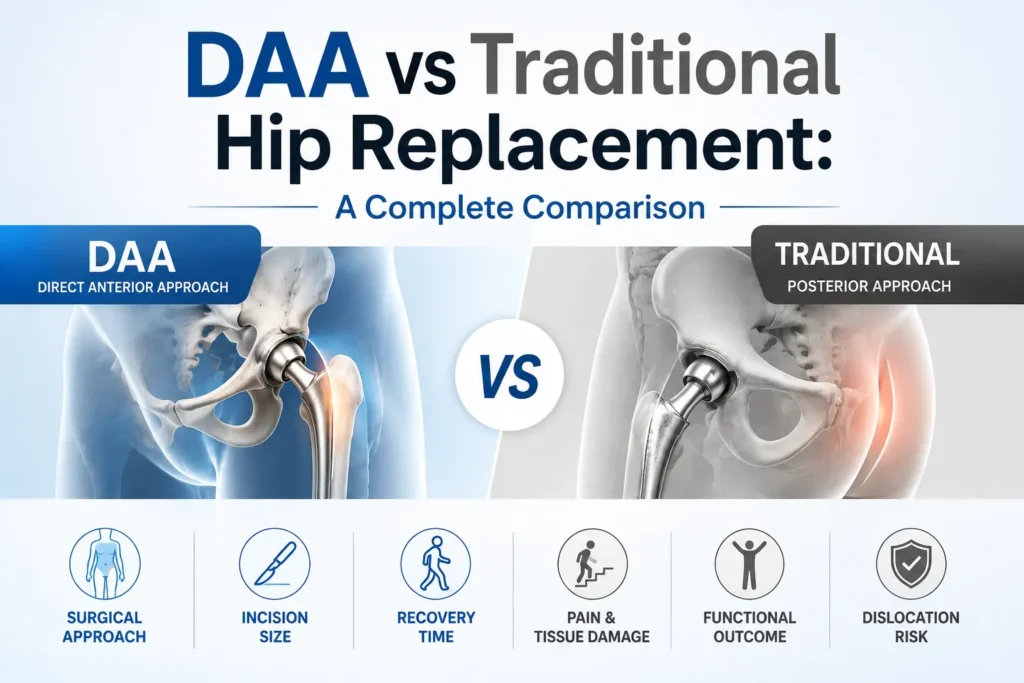
DAA vs Traditional Hip Replacement: A Complete Comparison

Hip replacement surgery has transformed the lives of millions of people suffering from chronic hip pain caused by arthritis, injury, or joint degeneration. However, modern advances in orthopaedic surgery have introduced different surgical approaches, giving patients more options than ever before. One of the most talked-about techniques today is Direct Anterior Approach (DAA) Hip Replacement. Many patients are attracted to this procedure because it is often associated with smaller incisions, faster recovery, and less disruption to surrounding muscles. But does that mean it’s better than traditional hip replacement surgery? The answer isn’t always straightforward. Both procedures aim to achieve the same goal: relieving pain and restoring hip function. The primary difference lies in how the surgeon accesses the hip joint. In this guide, we’ll compare Direct Anterior Approach (DAA) Hip Replacement and traditional hip replacement surgery, helping you understand the advantages, limitations, recovery expectations, and factors that determine which procedure may be right for you. What Is Direct Anterior Approach (DAA) Hip Replacement? Direct Anterior Approach (DAA) Hip Replacement is a minimally invasive surgical technique that allows the surgeon to access the hip joint from the front of the body. Instead of cutting through major muscles, the surgeon works between natural muscle planes to reach the damaged joint. The damaged portions of the hip are removed and replaced with artificial implants designed to restore movement and reduce pain. Because the surrounding muscles remain largely intact, many patients experience a smoother early recovery. What Is Traditional Hip Replacement? Traditional hip replacement usually involves accessing the hip joint through the side or back of the hip. The most common traditional approaches include: In some traditional procedures, certain muscles and soft tissues may need to be separated to provide adequate access to the hip joint. Traditional techniques have been successfully used for decades and continue to deliver excellent long-term outcomes for many patients. DAA vs Traditional Hip Replacement: Key Differences Surgical Approach DAA Hip Replacement: Traditional Hip Replacement: Muscle Preservation One of the biggest advantages of Direct Anterior Approach (DAA) Hip Replacement is muscle preservation. Because major muscles are not detached, patients often experience: Traditional approaches may involve greater soft-tissue manipulation, although modern surgical techniques have significantly reduced tissue damage. Recovery Speed Recovery is one of the main reasons patients consider the anterior approach. Patients undergoing DAA Hip Replacement often experience: However, recovery depends on multiple factors, including age, overall health, rehabilitation, and surgical complexity. Risk of Hip Dislocation The hip joint relies on surrounding muscles and soft tissues for stability. Because the anterior approach preserves important supporting structures, some studies suggest a lower risk of dislocation in appropriately selected patients. Regardless of the surgical technique, following post-operative instructions remains essential. Surgical Visibility Traditional approaches provide excellent visibility of the hip joint and allow surgeons to treat a wide range of complex cases. Although DAA Hip Replacement offers several advantages, it can be technically more demanding and may not be suitable for every patient. Cosmetic Considerations Many patients ask about scarring. The incision used during DAA Hip Replacement is typically located at the front of the hip. Traditional procedures place the incision on the side or back. Although scar location differs, the primary focus should always remain on surgical outcomes rather than cosmetic appearance. Comparison Table: DAA vs Traditional Hip Replacement Feature DAA Hip Replacement Traditional Hip Replacement Surgical approach Front of the hip Side or back of the hip Muscle disruption Minimal May be greater Early mobility Usually faster Depends on the approach Recovery Often quicker Varies by patient Hospital stay Often shorter May be longer Post-operative restrictions Usually fewer May be more extensive Surgical complexity More technically demanding Widely established Is DAA Hip Replacement Always Better? No. While Direct Anterior Approach (DAA) Hip Replacement offers several benefits, it isn’t automatically the best choice for every patient. Treatment decisions should be based on factors such as: A successful outcome depends more on appropriate patient selection and surgical expertise than on the surgical approach alone. Who Is a Good Candidate for DAA Hip Replacement? You may be a suitable candidate if you: Only a comprehensive orthopaedic evaluation can determine whether the anterior approach is appropriate. When Is Traditional Hip Replacement Recommended? Traditional hip replacement may be preferred in patients with: Many complex cases continue to achieve excellent outcomes through traditional surgical techniques. Recovery After DAA Hip Replacement Most patients experience several early advantages after DAA Hip Replacement, including: First Few Days First 2–6 Weeks Three Months and Beyond It’s important to remember that complete recovery still requires time, rehabilitation, and commitment to physical therapy. Potential Risks of Both Procedures Every surgical procedure carries certain risks. Potential complications include: Choosing an experienced orthopaedic surgeon and following rehabilitation recommendations can significantly reduce these risks. Why Surgeon Experience Matters More Than the Surgical Approach Many patients focus exclusively on whether they should choose DAA Hip Replacement or a traditional approach. However, one of the most important factors influencing outcomes is the surgeon’s expertise. Dr. Vinayak Ghanate, an experienced orthopaedic surgeon in Baner, Pune, specializes in hip preservation, joint replacement, complex trauma reconstruction, and sports-related orthopaedic conditions. With advanced training that includes a Fellowship from the Royal College of Surgeons of Edinburgh (FRCS Orthopaedics) and clinical experience at leading hospitals in the United Kingdom, Dr. Ghanate follows evidence-based treatment protocols tailored to each patient’s individual needs. His treatment philosophy emphasizes personalized care, modern surgical techniques, and rehabilitation programs designed to improve long-term mobility and quality of life. Frequently Asked Questions Which procedure offers faster recovery? Many patients undergoing Direct Anterior Approach (DAA) Hip Replacement experience faster early recovery because the procedure minimizes muscle disruption. Is DAA Hip Replacement less painful? Patients often report less post-operative discomfort, although pain levels vary from person to person. Does traditional hip replacement have a lower success rate? No. Traditional hip replacement has an excellent long-term success record and remains one of the most effective orthopaedic procedures. Which procedure leaves a smaller scar? Scar size depends on multiple factors, including surgical

Recovery After DAA Hip Replacement What Makes It Faster
DAA Hip Replacement

Recovery After DAA Hip Replacement: What Makes It Faster?

If you’re considering Direct Anterior Approach (DAA) Hip Replacement, one of the biggest questions on your mind is likely, “How long will recovery take?” The good news is that many patients who undergo DAA Hip Replacement experience a quicker recovery than those who have traditional hip replacement surgery. Thanks to its muscle-sparing surgical technique, many patients are able to walk sooner, experience less pain, and return to their daily activities more quickly. However, every patient’s recovery journey is unique. Factors such as age, overall health, rehabilitation, and following your surgeon’s advice all play a significant role in achieving the best outcome. In this comprehensive guide, we’ll explain why recovery after Direct Anterior Approach (DAA) Hip Replacement is often faster, what to expect during each stage of recovery, and how you can maximize your healing. Quick Answer Recovery after Direct Anterior Approach (DAA) Hip Replacement is often faster because the surgeon reaches the hip joint from the front of the body without cutting major muscles or tendons. This muscle-preserving approach generally results in: While recovery is typically faster, complete healing still requires proper rehabilitation and regular follow-up care. What Is Direct Anterior Approach (DAA) Hip Replacement? Direct Anterior Approach (DAA) Hip Replacement is a modern minimally invasive technique used to replace a damaged hip joint. Unlike traditional hip replacement approaches that require separating or detaching muscles, the DAA technique uses a natural space between muscles to access the hip joint. This means the surrounding muscles, tendons, and soft tissues experience less trauma during surgery, which contributes significantly to a smoother recovery. Why Is Recovery Faster After DAA Hip Replacement? Several factors contribute to the faster recovery associated with DAA Hip Replacement. 1. Muscle-Sparing Surgical Technique The biggest advantage of the Direct Anterior Approach is that major muscles responsible for walking and hip movement are not detached during surgery. Because muscle damage is minimized, patients often experience: This allows patients to regain mobility sooner than with traditional approaches. 2. Reduced Post-Operative Pain Since fewer soft tissues are disturbed during surgery, inflammation is generally lower. Many patients report: Pain control plays a major role in accelerating recovery. 3. Earlier Walking After Surgery One of the major milestones following DAA Hip Replacement is early mobilization. In many cases, patients begin standing and walking with assistance on the same day or within 24 hours after surgery. Early movement helps: 4. Lower Risk of Hip Precautions Traditional hip replacement sometimes requires patients to avoid certain movements for several weeks. Because the anterior approach preserves key muscles and soft tissues, many patients have fewer movement restrictions during recovery, allowing them to resume everyday activities more comfortably. 5. Faster Return to Daily Activities Patients often return to activities such as: Recovery varies, but many patients resume normal routines sooner than expected. Recovery Timeline After DAA Hip Replacement Although recovery differs from person to person, the following timeline provides a general overview. First 24–48 Hours Immediately after surgery, patients are encouraged to begin moving under medical supervision. During this period, you can expect: Week 1–2 During the first two weeks: Most patients continue using a walker or cane as advised by their surgeon. Weeks 3–6 At this stage, patients often notice significant improvements. Common milestones include: Physical therapy continues to strengthen muscles and improve mobility. Weeks 6–12 Most patients experience: Many patients resume recreational activities such as walking, swimming, or cycling after receiving medical approval. Three Months and Beyond Although many patients feel significantly better by three months, complete recovery continues over several months as muscles strengthen and tissues fully heal. What Factors Influence Recovery? Several factors affect how quickly patients recover after Direct Anterior Approach (DAA) Hip Replacement. Age Younger patients often recover more quickly, but healthy older adults can also achieve excellent outcomes. Overall Health Managing chronic conditions such as diabetes or obesity can improve healing. Physical Therapy Consistent rehabilitation is one of the most important contributors to a successful recovery. Nutrition A balanced diet rich in protein, vitamins, and minerals supports tissue repair and recovery. Following Medical Advice Patients who closely follow their surgeon’s post-operative instructions generally experience better long-term results. Tips for Faster Recovery After DAA Hip Replacement You can support your recovery by following these practical recommendations. Stay Active Gentle movement improves circulation and prevents stiffness. Attend Every Physiotherapy Session Your rehabilitation program is designed to restore strength, flexibility, and balance safely. Eat a Healthy Diet Adequate protein, calcium, and vitamin D help support healing and bone health. Take Medications as Prescribed Pain management allows you to participate more comfortably in rehabilitation exercises. Protect Your Surgical Wound Follow wound care instructions carefully to reduce the risk of infection. Avoid High-Impact Activities Running, jumping, and heavy lifting should only be resumed after approval from your orthopaedic surgeon. Are There Any Risks During Recovery? Like any surgical procedure, DAA Hip Replacement carries certain risks, although complications are relatively uncommon when performed by an experienced surgeon. Potential risks include: Regular follow-up appointments help identify and manage any concerns early. When Should You Contact Your Surgeon? Seek medical attention if you experience: Prompt evaluation can help prevent serious complications. Why Choosing an Experienced Hip Replacement Surgeon Matters The success of Direct Anterior Approach (DAA) Hip Replacement depends not only on the surgical technique but also on the experience and expertise of the operating surgeon. Dr. Vinayak Ghanate is a highly experienced orthopaedic surgeon in Baner, Pune, specializing in hip preservation, complex trauma surgery, and joint replacement procedures. With advanced international training, including a Fellowship from the Royal College of Surgeons of Edinburgh (FRCS Orthopaedics) and clinical experience at leading hospitals in the United Kingdom, he adopts evidence-based surgical techniques designed to maximize patient recovery while preserving long-term joint function. His patient-centered approach focuses on personalized treatment planning, minimally invasive techniques where appropriate, and structured rehabilitation programs to help patients regain mobility safely and confidently. Frequently Asked Questions How long does it take to walk after DAA Hip Replacement? Many patients begin walking with assistance on the day

Copyright © 2025 All rights reserved. Developed by Cheersdigitalmarketing.com
Scroll to Top