Being diagnosed with Avascular Necrosis (AVN) can be overwhelming. One of the first questions many patients ask is:
“Can AVN be treated without surgery?”
The answer is yes but only in certain cases.
Non-surgical treatments can help manage symptoms, slow disease progression, and improve quality of life, especially when AVN is diagnosed in its earliest stages. However, because AVN involves the loss of blood supply to bone tissue, conservative treatment alone may not always stop the condition from progressing.
Understanding when non-surgical treatment is appropriate and when surgery becomes necessary is essential for making informed decisions about your long-term joint health.
In this guide, we’ll explore the available non-surgical treatment options for AVN, their effectiveness, and what patients should realistically expect from them.
Quick Answer
AVN can sometimes be managed without surgery during its early stages. Non-surgical treatment focuses on reducing pain, protecting the affected joint, improving mobility, and slowing disease progression.
Common non-surgical treatments include:
- Activity modification
- Pain management medications
- Physical therapy
- Weight management
- Assistive walking devices
- Lifestyle changes
- Treatment of underlying medical conditions
However, if AVN continues to progress or bone collapse occurs, surgical intervention may become necessary.
Understanding AVN: Why Early Treatment Matters
Avascular Necrosis occurs when blood flow to a bone is disrupted.
Without adequate blood supply:
- Bone tissue begins to die
- Structural weakness develops
- The bone may collapse
- Joint damage occurs
- Arthritis can develop
The hip is the most commonly affected joint, although AVN can also occur in the shoulder, knee, and ankle.
The earlier AVN is diagnosed, the greater the opportunity to preserve the natural joint and avoid major surgery.
When Can AVN Be Treated Without Surgery?
Non-surgical treatment is usually considered when:
The Disease Is in an Early Stage
Patients diagnosed before significant bone damage occurs often have more treatment options.
There Is No Bone Collapse
If imaging shows that the bone structure remains intact, conservative management may be appropriate.
Symptoms Are Mild
Patients experiencing manageable pain and minimal functional limitations may benefit from non-surgical approaches.
The Affected Area Is Small
Smaller lesions generally respond better to conservative treatment than extensive areas of bone damage.
Non-Surgical Treatment Options for AVN
Activity Modification
Reducing activities that place excessive stress on the affected joint can help slow disease progression.
Your doctor may recommend avoiding:
- High-impact sports
- Running
- Jumping activities
- Heavy lifting
This helps reduce pressure on the weakened bone.
Weight-Bearing Restrictions
In some cases, patients are advised to temporarily reduce weight-bearing on the affected limb.
This may involve:
- Crutches
- Walkers
- Walking sticks
Reducing joint stress may help preserve bone structure during early-stage disease.
Pain Management Medications
Pain control is often an important part of treatment.
Doctors may recommend:
- Anti-inflammatory medications
- Pain relievers
- Short-term symptom management strategies
These treatments help improve comfort but do not reverse AVN.
Physical Therapy
A structured rehabilitation program can help maintain:
- Joint mobility
- Muscle strength
- Balance
- Functional movement
Physical therapy also helps patients remain active while minimizing stress on the affected joint.
Lifestyle Modifications
Certain lifestyle changes can help reduce factors associated with AVN progression.
These include:
Limiting Alcohol Consumption
Excessive alcohol use is a recognized risk factor for AVN.
Managing Steroid Use
Long-term corticosteroid use is one of the leading causes of AVN. Patients should discuss alternatives with their physician whenever medically appropriate.
Maintaining a Healthy Weight
Excess body weight increases stress on weight-bearing joints such as the hip and knee.
Treating Underlying Medical Conditions
Certain conditions contribute to AVN development, including:
- Blood disorders
- Autoimmune diseases
- Metabolic disorders
- Clotting abnormalities
Addressing these conditions may help improve overall treatment outcomes.
What Non-Surgical Treatment Cannot Do
One of the most important facts patients should understand is that conservative treatment has limitations.
Non-surgical treatment generally cannot:
- Restore dead bone tissue
- Reverse established AVN
- Repair bone collapse
- Rebuild damaged joint surfaces
Its primary role is to slow progression, manage symptoms, and preserve function for as long as possible.
How Effective Is Non-Surgical Treatment?
The effectiveness of conservative treatment depends on several factors:
Stage of AVN
Early-stage AVN responds more favorably than advanced disease.
Size of the Lesion
Smaller affected areas generally have better outcomes.
Patient Age
Younger patients often experience better healing potential.
Underlying Cause
Addressing the root cause of AVN can improve treatment success.
For some patients, non-surgical treatment may provide symptom control for years. For others, disease progression may continue despite conservative management.
Signs That Surgery May Be Needed
While many patients hope to avoid surgery, there are situations where surgical treatment offers the best chance of preserving joint function.
Warning signs include:
- Increasing pain
- Progressive limp
- Reduced mobility
- Bone collapse visible on imaging
- Failure of conservative treatment
- Development of arthritis
At this stage, delaying intervention may result in further joint damage.
Surgical Options When Non-Surgical Treatment Is Not Enough
Depending on disease severity, treatment options may include:
Core Decompression
Often recommended for early-stage AVN before collapse occurs.
The procedure helps:
- Reduce pressure within the bone
- Improve blood circulation
- Stimulate healing
Bone Grafting Procedures
Bone grafts may be used to support weakened areas and promote regeneration.
Hip Preservation Surgery
For selected patients, joint-preserving procedures can help maintain natural hip function.
Total Hip Replacement
When significant collapse or arthritis develops, hip replacement may provide the most reliable long-term solution.
The Importance of Early Diagnosis
One of the biggest challenges with AVN is that symptoms often appear after bone damage has already begun.
Patients experiencing:
- Persistent groin pain
- Hip discomfort while walking
- Unexplained joint pain
- Stiffness or limping
should seek prompt evaluation.
MRI scans can detect AVN before it appears on standard X-rays, allowing treatment to begin earlier when outcomes are typically better.
Expert Insight from Dr. Vinayak Ghanate
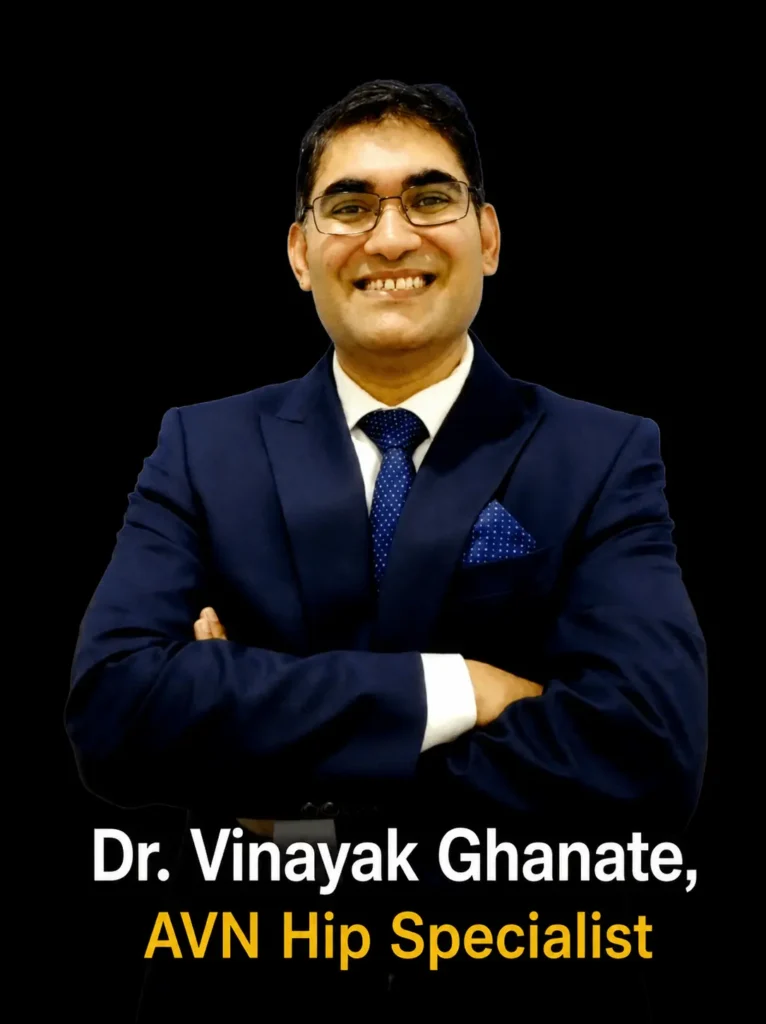
Dr. Vinayak Ghanate is an experienced orthopaedic surgeon in Baner, Pune, with advanced expertise in hip preservation surgery, joint replacement, complex trauma reconstruction, and bone infection management.
Having completed advanced orthopaedic training, including a Fellowship from the Royal College of Surgeons of Edinburgh (FRCS Orthopaedics), Dr. Ghanate focuses on evidence-based treatment plans tailored to each patient’s condition and stage of disease.
For patients diagnosed with AVN, timely evaluation is critical. Early-stage disease may be managed through conservative measures or joint-preserving procedures, while advanced stages often require more definitive surgical intervention.
Frequently Asked Questions
Can AVN heal naturally without treatment?
No. AVN generally does not heal on its own because the underlying issue involves loss of blood supply to the bone.
Can exercise cure AVN?
Exercise cannot cure AVN, but appropriate physical therapy can help maintain strength, flexibility, and joint function.
Is surgery always required for AVN?
Not always. Early-stage AVN may be managed conservatively, but some patients eventually require surgery if the disease progresses.
What is the best treatment for early-stage AVN?
Treatment depends on the size and location of the lesion, symptoms, and overall patient health. Early-stage AVN often benefits from conservative management or joint-preserving procedures such as core decompression.
How quickly does AVN progress?
Progression varies significantly between individuals. Some cases progress slowly over several years, while others worsen more rapidly.
Final Thoughts
So, can AVN be treated without surgery?
The answer is yes particularly when the condition is identified early and the bone structure remains intact. Non-surgical treatment can help reduce symptoms, improve mobility, and slow progression.
However, it’s important to understand that conservative treatment is not a cure. Because AVN involves the death of bone tissue due to reduced blood supply, ongoing monitoring is essential to determine whether the disease is stable or progressing.
The best outcomes are often achieved through early diagnosis, regular follow-up, and a personalized treatment plan developed by an experienced orthopaedic specialist. For many patients, timely intervention can make the difference between preserving the natural joint and requiring joint replacement surgery in the future.
https://shorturl.fm/2d0ko
https://shorturl.fm/UeB7r
https://shorturl.fm/llMqU
https://shorturl.fm/ZfdsF
Dude, this AVN guide nails the early-stage messaging. It’s clear on non-surgical options and the limits, which I appreciate. In Suplery we’ve seen how clinics and barbershops alike struggle with coordinating products and stock for rehab-related regimens, so a heads-up that early treatment buys time is key for minimizing downtime. Suplery can streamline inventory, orders, and data in one place, helping clinics and wellness studios keep gear ready for patients without the chaos. If you’re in a spa, barbershop, or skincare clinic, consider checking out Suplery for a unified dashboard and real-time stocktakes to stay on top of treatment supplies.
https://shorturl.fm/8FXcD
https://shorturl.fm/k2a9B
https://shorturl.fm/sIaFy
https://shorturl.fm/XbMEW
https://shorturl.fm/sSzC9
https://shorturl.fm/luLyu
https://shorturl.fm/Xgnjs
https://shorturl.fm/ExShM